Give Up the Office Desk

Give Up the Office DeskMore and more people are transitioning from the office to move from their cubicle at work to working out of their home or even at a coffee shop. Some people leave the office just so they can concentrate on a project or task. They need to get away from the constant interruptions that may occur at the office from colleague’s etc stopping by their office. Being able to focus 100% on writing a report means you have can get so much more done in less time. Some business people have made that transition out of the office all together. They no longer maintain an office. How do they give up the office desk and where do they work? We will examine this in some more detail.

Give Up the Office Desk – Working at Home

Working at home has many advantages for the employee as well as the company you work for. No more commutes to the office, no office space to maintain and a more relaxed atmosphere at home can reduce overall stress for everyone. Working at home takes dedication and commitment to doing one’s job without slacking off out of sight of the boss. It also means being available all of the time with set hours and having the tools to do your job.

This usually means a separate phone line, a high speed data connection, printers, copiers, fax machine and a smartphone to be able to monitor messages all of the time and to respond to calls while out of the home office. The advantage is that you save that commute time which for many people can be two hours a day or more assuming a one hour one way trip to the company office. This is a huge improvement to quality of life for many people.

Working at the Coffee Shop

We often see people working on their computers at coffee shops and even in some restaurants. The key appears to be having access to the internet, although some will be working offline on reports or assignments if they are a student. If you are the type that can concentrate with all of the distractions around you in a coffee shop, you have it made. Otherwise coffee shops may be a bit difficult to work in. Especially if they are noisy and you are also taking calls from people at work or customers. Personally I have worked at my computer in a coffee shop, but it is not my favorite place.

Give Up the Office Desk -Cheaper for Business

The jury is out regarding whether it is cheaper for business or not. Sure there are savings in terms of corporate office space that is not needed in a office building. You still have the communication costs that go along with having an employee, the benefits etc. The question is whether these savings are countered by people goofing off at home or elsewhere whey they are supposed to be working.

Most people will actually work more than they would at the office and get more done as well. Some will not and this is the group that manages need to pay attention to. In reality, every job should have a set of expectations and deliverables that can be measured in some way. If these are well defined, then an employee and the employer both know what the expectations are and can be measured accordingly.

More Flexibility

There certainly is more flexibility for employees when they work at home. Taking the kids to school, looking after sick kids and dealing with other personal issues is much easier. Flexible working hours make this all possible and employees typically will make up these hours and much more. They actually put in more hours that they might otherwise if they were at the office. How many times have you been to meetings in the office, when someone gets up, apologizes that they have to leave the meeting. They have to catch the train home or their ride home. When they work at home, there is no train or ride to worry about. They can stay on the conference call until the meeting is concluded.

Always Available – Mobile Phones. PDA’s etc

With the tools available today, such as smartphones and PDA’s, everyone can stay in touch with the office. They can keep up with email and other productivity requirements almost anywhere. Get equipped with the latest gadgets and you will have the freedom to work almost anywhere.

Will You Have a Choice Regarding When to Retire

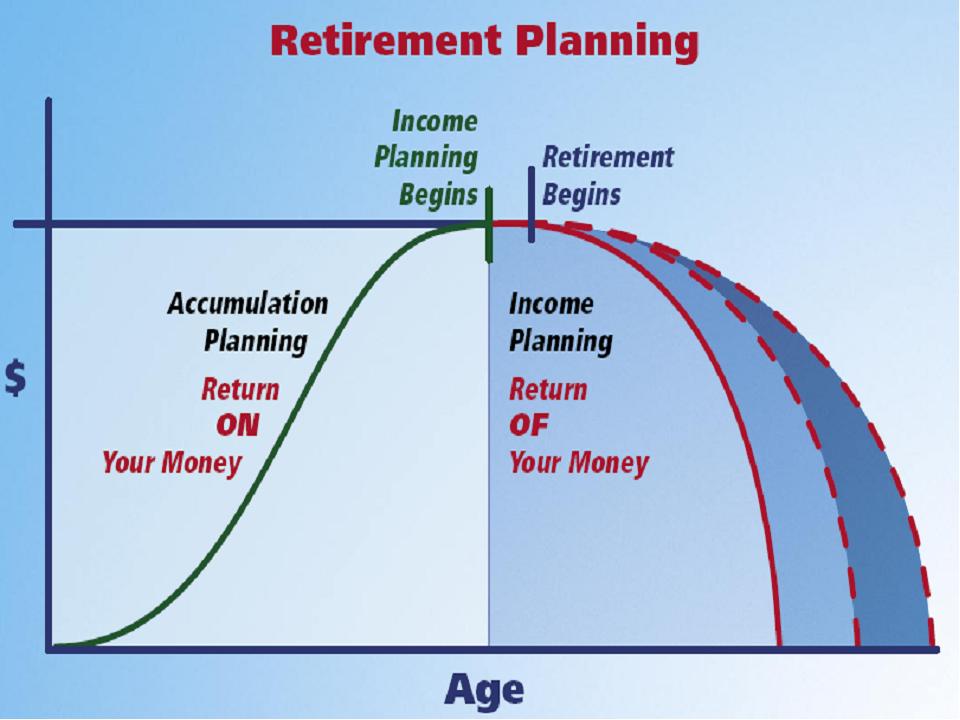
Will You Have a Choice Regarding When to RetireDo you know when you will retire? Will you have a choice regarding when to retire? Most people think that they have the freedom to choose when to retire and that they will retire when their finances are in shape to provide them with the level of income to give them the quality of life they would like to enjoy. For many people this is true, however for many others retirement is quite different from what they planned or expected. The reasons for this change can be many, however it is usually things that occur in a person’s life that are outside their control.

For some people they are let go earlier than they thought they would be from a company and must find other work. Sometimes it is at less money and this means they have to work longer than expected, past the retirement age they anticipated. For others, health gets in the way, either for themselves or for someone who is close to them that they need to look after. We never know what curve balls life will throw at us and that is just one of the reasons why early sound financial planning is important and can make a huge difference in their quality of life.

Will You Have  a Choice Regarding When to Retire

The following are some of the items to consider about this particular issue of Will You Have  a Choice Regarding When to Retire:

What are Some of the Reasons People are Forced to Retire Earlier Than Planned

The reasons can be many, however we have tried to summarize them in the following list:

  • Company downsizing
  • Company bankruptcy
  • Disability
  • Poor health
  • Health related issues of a family member
  • Other events in your life

We all know people who have said they will work until they are 65 and then retire. Suddenly life throws a curve ball at them in their early 50’s and they are no longer working for any of the reasons above. Their plans are in disarray and if they did not have a plan in place for the finances, they could be in significant financial difficulty. Surveys have shown that the majority feel they are in control of when they will retire, when in actual fact only a small percentage actually make their own decision about retirement.

Another interesting fact of this survey is that they only have less than a month’s time in terms of warning that they are going to retire. This is usually a downsizing situation or an incentive plan that is offered. In many cases as well companies simply decide they are going bankrupt and / or closing plants. One month’s time is not a lot of time to adjust to the fact that you are no longer going into work and earning a paycheck.

Financial Retirement Plans Make the Transition Much Easier

With strong financial plan that has been growing for some time, will ease the transition to retirement life. Your life can be much easier from a financial perspective. Wondering where your money is coming from in retirement worries many people. Whether you have enough income to live the quality of life you are looking is another concern.  Many people retiring today are going to live 20 or 30 years in retirement and it takes a large sum of money to generate the level of income that is needed to support the life style you need. If you have sufficient funds, you can focus on the other aspects of retirement, which can be equally important.

Retiring healthy and having the money needed to enjoy your retirement are among the top priorities for most people. Without your health, retirement can be difficult and money really becomes a secondary issue. Good health and maintaining your health is the top priority for most people.

Planning For Retirement Early

There are a number of steps that many people can take to prepare themselves financially and health wise for retirement. Will You Have  a Choice Regarding When to Retire. By planning for retirement you will have a much better chance of having enough money to enjoy retirement. We have listed them in the following list in no particular order:

  • Implement your financial plan
  • Start saving early
  • Maintain your health through exercise, diet etc
  • Have an early retirement goal in mind for your retirement, with the option to work longer if desired
  • Avoid debt as much as possible to reduce interest cost
  • Take control of your financial life

These are just a few broad steps that consumers can consider. It will help them to prepare for retirement that comes earlier than expected. A financial plan will help you  deal with any issue that comes your way in  early retirement. Plan now and have peace of mind.

We have many other posts on this site dealing with financial planning and retirement. Take the time to review Will You Have  a Choice Regarding When to Retire.

Kick Start Your Finances

Kick Start Your FinancesNew Years’ is just around the corner and most people begin thinking about their new year’s resolutions. Kick Start Your Finances or we are going to try to lose some weight, quit smoking, or perhaps drink less or go on a vacation. These are all great things to consider, however, maybe we can add something more to this list. Maybe we can add getting our finances in order, perhaps saving for emergencies, that new car we have been thinking about, the kid’s college fund, and oh yes retirement which is many years away for some.

Kick Start Your Finances – Realistic Goals

Like all New Year’s resolutions, if they are not realistic, they probably will not happen. It is important to set realistic goals to help make sure that we can achieve them. Setting those goals should be based on our current financial situation and not some fictional wish list. The first step to setting these goals for the coming year should be based on a financial plan that summarizes your current assets, debts, cash flow, and income streams. Once you have that information, you can begin deciding what your priorities are and what goals you want to set for the coming year.

Pay Yourself First – Savings vs. Debt

Many banks and financial institutions talk about paying yourself first. What they really mean by that is to put money into a savings plan with them. Whether it is an RRSP in Canada or a 401k in the US, the banks want you to invest with them. You can also pay yourself first by paying off your debt so that you are paying less interest expense and ultimately when the debt is fully paid off, you have more cash to pay other things and save for the future.

Think Long Term – Retirement, College Funds, Mortgage

While you want to pay your debt off as quickly as possible, it is also smart to start thinking about the long term regardless of what age you may be. If you are young, setting a small amount aside for retirement every week can add up in a hurry and make you financially independent at retirement age. The same applies if you have young children. We want them to go to college and it takes a lot of money these days to put a child through college. Saving when they are young makes this also a lot easier as well.

Spending Less to Achieve Your Goals

You may find that initially at least you will have to spend less to achieve your goals in terms of saving money for college funds, debts, and retirement. But taking this step has huge benefits as you get older and close to retirement. It also means that you live within your income level and avoids debt increasing. This is important at any age even if you are retired today. Once you pay down your debt you will have more money at your disposal to pay for other things including your financial goals and other things that are part of your financial plan such as upgrading the house.

Peace of Mind

Are you one of those people who lie awake at night thinking about their finances? Once you have a plan there is nothing to think about. Focusing on implementing the plan provides a great deal of peace of mind and can eliminate those sleepless nights. A friend of mine who was retiring from a well-paid government job with a large pension did not know if he was going to have enough money in retirement. He worried a lot about this because he did not have a financial plan. He did not have a budget. They lived from paycheck to paycheck and often did not know how he was going to meet all of his obligations. The answer is pretty simple:

  • Develop a budget
  • Develop a financial plan
  • Pay down your debt as quickly as possible
  • Set aside money for retirement
  • Set aside money for emergencies
  • Save for special projects such as new cars and home renovations
  • Live within your means

New years is coming quickly. Have you made your new year’s resolutions? Even if you read this after New Year’s has long passed, now is the time to put this plan into action and obtain that peace of mind that everyone wants to have.

Transition to Retirement the Uncharted Course

Transition to Retirement the Uncharted CourseThe transition to retirement is the uncharted course that many of us are either already on or will be soon since more and more people will be retiring in the next few years. Retirement means many different things to people all over the world. For some it means leaving one job to start another in a different career, while for others it means never to work again for money, but volunteer and provide support to charities and other organizations.

Some people chose to spend a lot of time on the golf course while others will spend a great deal of time with family. There are so many options and people everywhere must figure out what is the right plan for them based on their personal needs and desires and their finances. Do they have the money that they will need to live in the manner they envisaged retirement to be? This the key question for everyone retiring today. How will they Transition to Retirement in a successful and satisfactory manner?

Transition to Retirement the Uncharted Course – Situations

Baby Boomers Retiring – There are literally millions of baby boomers that are retiring over the next 20 years. Some will continue working well into their 70’s while some have already retired early. Regardless of when they retire, they are going to shape our economy for many years and investment advisers are lining up to help them to invest and spend their money. The operative word is to be “aware” and to be careful with your investments. This is all that stands between you and poverty or at least a less than satisfactory life style during your retirement years. There are lots of scammers out there that are just waiting to relieve these baby boomers of their money. As we get older there is less chance that we will make good decisions and we will tend to spend more money than we sometimes need to. Rely on family if you can trust them; however in general if it does not feel right, don’t spend the money. Wait, think about it, talk to friends and family whom you trust and then make up your mind as to whether it is a good deal or not.

Enjoy Retired Life

This is the most important element and consideration. You want to have sufficient money to be able to enjoy your retirement in the life style that you had planned and that means having sufficient income to meet your needs. It does not matter whether it is golfing every day, being a snow bird and traveling south every winter, going on trips or just spending time with the family. Everyone defines their level of enjoyment differently and all we are saying here is think about what you want for your retirement and then plan to have sufficient money to enable the life that you would like to have. The earlier you start, the better off you are going to be. You may want to work a little longer or you may want to continue working because you enjoy it so much. Decide what is right for you and then develop a plan that is going to get you there while planning for contingencies, since we never know what is coming our way.

Work After Retirement

Some people retire from their jobs at 50 and never work again. While others just start another career. Some will work well into their 80’s just because they like to so much. Many people will work as long as they can to augment their income to give them a bit better style of living. The bottom line is that you must have enough money and you also have to have something to do. Most people are not satisfied to just sit around and do nothing. We need to have hobbies, we need to volunteer, we need to spend time with the family and we need to feel that we are still contributing to life. Whatever works for you is great; just know that you need to have a plan and activities that will enable you to enjoy your retirement.

Can you Depend on Government Retirement Plans

At the present time, it appears that seniors will be able to depend on receiving some retirement income from their government. There will be changes. Some governments are phasing in later payments, for example moving old age payments from 65 to 67. This means you will have to work 2 years more before you can collect an old age payment. Also these payments are not always going to increase as fast as inflation and although it is nice to receive these payments, consumers must not rely on this income as their sole source of income.

Transition to RetirementWill My Money Last During Retirement

A common question by many consumers and the answer is that it depends on a lot of factors which you should discuss with a financial planner. These factors include:

  • Your age when you begin collecting
  • How long will you live
  • How much you take out each year
  • Will your investments do well over time

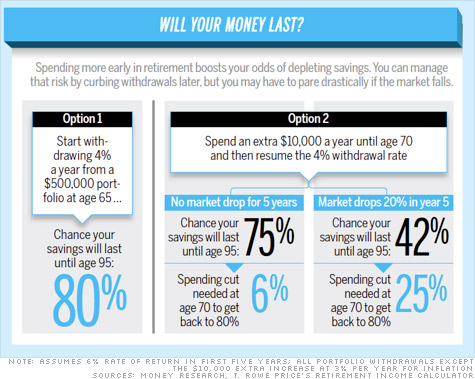
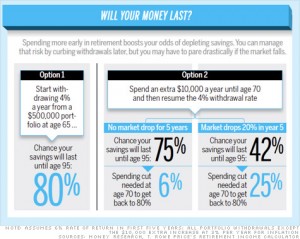
Many investment planners will suggest taking out 4% each year, investing conservatively and focus on income generation investments that are well diversified. As long as you do not have to withdraw a significant amount of money in a down market, chances are you may be able to have your money last well into your retirement.

When to Take CPP

CPP is the Canada Pension Plan. Many developed countries have something similar to the CPP. It can be taken as early as age 60 and delayed until age 67. If you take the CPP at age 60, there is a 35% penalty on average that is prorated if you delay taking the CPP in later years. There is lots of discussion and disagreement on when you should take the CPP. The break even age seems to be around 74 or 75. This means that if you take the CPP at age 67, you have to live until at least 75 to collect the money that you would have received had you started collecting at age 60 even with a major penalty. It really depends on how long you expect to live and whether you need the money now or can wait. The same applies to other government pensions in other countries, although the calculations will be different based on their local plans.

Transition to Retirement

Planning for retirement is a smart thing to do. Planning should definitely include your finances, but also your lifestyle and what you are going to do with your time.  Start planning at least 10 years prior to retirement and if you can, transition into retirement by reducing the number of working hours and living on what you think will be your retirement income. This is a great way to get into the mind set of retirement.

How Much do You Really Need to Retire

Another tough question? Work related expenses are going to be less, but then leisure related expenses are going to be much higher at least in the initial years when you have your health to travel, play golf or whatever you plan to do. This question should be part of your financial planning. A financial planner can help you with this question by assessing your income from pensions and investments compared to your leisure plans, living expenses etc.
How Do You Know it is Time to Retire

Some people never want to retire. They enjoy what they are doing and the benefits of work too much. They enjoy being around people and they enjoy the challenge of work. Another group must work well past the standard retirement age just to make ends meet. They did not plan for retirement and they did not save for retirement. They might have lost a pension because of layoffs or company bankruptcy. A very tough position to be in for sure. If you finances are in place, if you have enough money to meet your living expenses and to meet your leisure activities, whatever they are, then it may be time to retire, particularly if you are not that excited about your job. This is a very tough decision and many people will retire from one job, make a career change and begin working at something they really enjoy.  This is also a form of retirement.

Transition to Retirement – Retirement Checklists

There are many checklists that consumers can find on the internet and by talking with your financial adviser. We have some on this website. Not all items will apply to every individual. The important thing is to take these lists and use the items that apply to your situation, your life style and your financial situation. Take the time over a few months to work on these items to begin creating a plan for your retirement. With a plan you will be in a far better situation to deal with retirement and enjoy it much more as well.

Debt In Retirement

Should you have debt during retirement? Probably not, if you can avoid it. Most people will pay off their home and all major loans prior to retirement. Their income may be fixed and they have to live on this alone. Having a mortgage paid for frees up a great deal of money to utilize for day to day expenses and also for those extra things you always planned on doing while retired. Still there are many seniors with debt from credit cards or small personal loans. It is very important to learn to live on your income at this stage, since working is not an option for most people.

Retirement Plan Options

Companies develop strategies and contingency plans to help them manage their business and deal with surprise situations that could impact their financial health. Individuals should do the same thing. Plan for health, plan for sickness, plan for some kind of curve ball that could disrupt your retirement. Constantly evaluate and adjust your plans to reflect the situation that you are dealing with and plan for the future. This is just something that makes great common sense to do to ensure that you have options that are workable for you during retirement.
Diversification

the mantra of investing is diversification. Never place all of your investments in one investment, no matter how good it sounds, no matter how good the income is. The risk is just too great that something will happen to cause you a lot of grief and leave you devastated financially. For example, who would have ever thought that GM would declare bankruptcy? Millions of shareholders and investors lost their investments leaving many seniors as well without their life savings. It is bad enough to lose some of your money in this situation, but to lose everything is catastrophic.

Investment Advisers

Having an investment adviser is a good thing. They should be providing you with quality information and helping you make investment decisions. Protect yourself by also doing your own investigation. Talk to other advisers, talk to other investors, research your decisions and the recommendations of the adviser. After all it is your money and you are taking the risk, not the advisor. If it does not make sense, if you do not understand the advice, if you feel uncomfortable, then do not follow their advice. Get another adviser.

Transition to Retirement – Make Your Own Decisions

We believe that all investors and this includes people who are retiring with sizable nest eggs should be making their own decisions after having done their own research and seeking advice from their investment advisers. Sometimes it is wise to have several advisers just to compare investment strategies and recommendations. Bottom line if you do not understand or do not feel comfortable, then trust your instinct and look elsewhere.

Investigate and Monitor

Once you have invested your money for retirement, never put it away and forget about it. At least once a month, take a look at how your investments are doing, meet with your adviser once every 6 months to review the status and progress towards your objectives. Investigate changes to your investments and make adjustments as needed.

Reassess Your Plan on a Regular Basis

Meet with your adviser at least once every 6 months or more often if you have an active investment strategy. Review the income and growth levels of your accounts, update investment strategies, re-balance your account if needed and reassess how you are doing relative to objectives and your retirement plans. This activity will help you to ensure that the money for your retirement will be there when it is needed.

Stay Involved

Some people are just too lazy or they do not care or they have a false confidence in their adviser that they will do the right thing. We say, stay involved and informed relative to the markets, to your investments and to your trades. Never allow a trade unless you have approved it ahead of time.

Best Places to Retire

There are many places across North America to retire. Some are friendlier from a tax perspective and quality of life perspective. Bottom line is that we suggest to readers that they evaluate what is most important to them from a financial perspective and a quality of life perspective and then decide what makes sense to them for their situation. Family, friends, taxes, cost of living and quality of life are the important attributes that many people take into account. Health coverage and health treatment facilities are also high on everyone’s list.

Good Luck, Comments are Welcome

We have covered a lot of different topics on this post. You can find out much more on some of other posts that deal with each subject alone. The transition of consumers into retirement is a complex subject and consumers need to spend the time they need to make sure they achieve the equality of life they wish to have in their retirement.

Have a truly great, fun filled and rewarding retirement! Make your Transition to Retirement a successful one.

Google Adsense – Optimize Your Site

Optimize Your SiteEvery day I learn a little bit more about the online advertising business. Today was one of those days were I attended a Google Adsense in your city Optimize Your Site forum sponsored by who else, Google. This was specifically sponsored by the Adsense team and not the search team. Over the years many of us have focused on SEO or search engine optimization. I really did not think about the major differences. Optimize your site from a google Adsense perspective as well as Google Search perspective. My definition of the difference between these two activities can be defined as follows:

SEO – are specific steps that a web owner takes to try to make sure that his or her site will rank well in the search engine results delivered to people who are searching for something. If you rank well then you might end up on the top page of the search results and someone might visit your web page, particularly if you are in the top 3 of 10 or so results that are on the first page.

Optimize Your Site – Adsense Optimization

is something totally different. This is the process of making sure that your advertising on your web page is noticed by your users, it is relevant and that you maximize your click rate once a user ends up on your site. It has nothing to do with getting them to come to your site. It has everything to do with ensuring that the content of the ads relate to what the user is looking for when they arrive on your site.

We are going to spend a lot of time talking about what we learned from this forum so that we can share this information with readers. If you have a web site and have put Adsense ad’s on it you will want to read this. If you are thinking about putting Google Adsense on your web site you will want to read this, otherwise don’t waste your time.

NOTE: This information does not in any way replace what Google has on its site and it does not in any way try to circumvent what Google is doing.

Here is a summary of what we learned at this seminar in no particular order:

Optimize Your Site

Opinions Expressed by other publishers

  • The location of you host can affect the source of your traffic e.g. host in the USA may decrease traffic for a Canadian web site
  • Use Meta tags with the address of your business included
  • Place the address of your business at the top or in the footer

Adsense Information

  • Set up search on your site to search your site and not the Internet
  • Adsense crawler looks at keywords, word frequency, font size, and link structure
  • Content above the fold is a higher priority than content below the fold
  • Pictures and image ads impact the amount of content above the fold and hence the type of ad that is served
  • Ad’s should be above the fold
  • Advertisements should be near navigational aids on your site
  • Ad’s should be easily distinguished from your content
  • Some color blending is acceptable
  • If you receive an email from Google telling you that you have a policy infraction on your site, you have 3 days to fix it and then they will check back to confirm that it is fixed.
  • There is a policy team to provide support in a situation that is not clear
  • Text/image ad’s are the most profitable as are
  • 160*600; 728*90; 300*250; and 468*60
  • Ad’s are displayed based on user surfing history. If you have been surfing sites on bananas and then switch to a site on apples, you will probably still see ad’s for bananas on the apple site.
  • Use Google analytics to decide which pages to optimize, especially with hard coded pages.
  • Content is king, always make sure your users experience great content
  • Use Google Chrome – open an incognito page to see how a fresh user will see your page; shows the performance of your ad’’s

Mobile

  • By 2015 there will be more mobile users than desktop users
  • 50% increase in mobile-focused advertising this year
  • Expect 30% of traffic to be from mobile
  • Recommended ad size is 320*50 and 300* 250
  • Note that the iPhone has an option to auto-remove all advertising
  • Use gomo.com to test your site

Double click for Small business

  • Allows publishers to deliver the highest paying ad regardless of whether it is served from Google or a competing network
  • First 90 million impressions per month are free
  • Schedule ads by location, time of day, start and end dates etc
  • Assists in reporting requirements of 3rd party advertisers
  • Can target down to postal code or zip code
  • This is really for a publisher who has Google Adsense, plus private advertising business they wish to place on their site and manage

I was a bit disappointed with the optimizing section of this session. We each had ten minutes and it felt rushed. However, we did get some good points such as ad sizing, color, positioning, search, etc.

Overall I thought it was time well spent. However, the real advantage will depend on the results of the changes that I plan to make and if there is any impact on the revenue I earn from my sites. Will let you know in a few months.

Save

Managing Your Parents Finances

Managing Your Parents FinancesDealing with your parent’s finances is stressful and emotional. If you deal with the issues in a business-like manner, you too can get through this trying time.  Many people must deal with raising their own families and supporting their parents as they get older. This also includes managing your parent’s finances. It often comes as a shock to find out that your parents cannot manage their finances any longer and need your help. They may not even realize that they need your help and harbor some resentment at having their personal affairs poked into.

Gather All Information about Your Parent’s Personal Affairs

We have gone through this several times with my own parents and my spouse. I can tell you that for us it was a gradual thing for the most part. Eventually, we had to take over everything when it became obvious that they could no longer take care of their own finances. We thought we would list the things you should review and start tracking. You need to begin by gathering and organizing all of the personal financial information included in the following list:

  • Bank and investment statements
  • Birth certificates
  • Checkbooks
  • Insurance policies
  • Investment policy statements
  • Unpaid bills
  • Wills
  • Tax information

Managing Your Parent’s Finances – Power of Attorney

The degree of control and involvement is limited unless your parents have written and signed a power of attorney. It designates someone able to control their financial and health issues while they are still alive. Without a power of attorney or sometimes referred to as a living will, even children cannot gain access to bank accounts, tax information, etc. Here is a list of the things that you should be able to gain access to with proper power of attorney:

  • Access safe-deposit boxes
  • Buy, manage, or sell real estate and other property
  • Exercise stock rights
  • Handle banking transactions
  • Manage tax returns and filing for government benefits
  • Transact in security markets
  • Update or renew insurance policies
  • Make health-related decisions based on their behalf

Summarize all Financial Information

It is important to summarize the basic financial situation of your parents relative to being able to fund all of their expenses. You will need to assess what assets they have and what monthly and annual expenses they have. Include basic living costs and medical care that they may need.

Once you have this information, you will be in a position to know if there are financial issues that you need to deal with. You will know whether steps should be taken to conserve cash or reduce expenses. This is a stressful and traumatic time for both the parents as well as the children who are usually the people who have to make all of these decisions.

Medical expenses are a huge cost. It is important to ascertain what coverage by insurance policies and your government’s medical care and what is not covered. You may be making decisions about support devices. This includes wheelchairs and home care with nurses and homemakers coming into full-blown nursing residences. With your parent’s doctor, you will be able to make decisions on the appropriate level of care and determine the cost involved as well.

Managing Emotions

The emotional part of this entire process is quite difficult, especially if are complications by any of the following:

  • Parental resistance
  • Emotional reactions on both sides
  • Lack of legal documents such as a living will
  • Differences of opinion between siblings
  • Insufficient funds to deal with the health-related issues

The best advice we can provide is to take things slowly and not overwhelm everyone. Discuss the issues over time and let people come to their own conclusions as long as an emergency does not develop. In the worse case, you may have to get a court order if there is no living will. If there is a disagreement between siblings as to what steps to take, legal steps may be needed.

Never Take Advantage

The last point we want to make is to emphasize that you have a very important job to do, and one that is not compromised. Many seniors are taken advantage of by their children and other relatives. You should never be dishonest and you should never take advantage of someone when they are vulnerable least of all your parents. If you see someone doing this sort of thing, take action and notify other family members. If necessary, call in the authorities.

How to Reduce Debt

How to Reduce DebtWe recently read a survey which prompted the writing of this post. This web site is dedicated to helping readers manage their debt and to also manage their savings. Consumers need to get involved and take control over their debt and savings to ensure they have a satisfactory financial future. No one else will do it for you. This is about, How to Reduce Debt.

We hope you read this post and can make use of the information as well to take control of your financial future. Failure to act or failure to deal with your debts is only going to cost you more money in terms of interest at the very least and at it’s worst, could push you into bankruptcy!

How to Reduce Debt – Survey

The survey is summarized as follows:

A recent survey indicates that consumers are not taking advantage of available tools and strategies to reduce and pay down their debt.

The reasons given are interesting.

They include:

  • The overall amount of debt that they have
  • Interest rates they pay on their debts  – despite interest rates remaining at near historic low levels.
  • The number of different debts they have as a barrier to debt freedom.

These are all valid reasons for the respondents, however if allowed to continue will stop them from not only paying down their debt quickly, but also cost them much more money as a result of increased interest charges.  Not getting involved and taking charge will possibly hurt you over a life time financially.

What are the tools available to consumers?

These tools include:

  • Consolidation of their debts at a single low interest rate.
  • Making extra payments on their mortgage.
  • Compare mortgage products from more than one lender the last time their mortgage came due.
  • Work with a professional financial adviser
  • A debt repayment plan that includes a specific date for when they expect to be debt-free.

More detail on each of these tools:

Consolidation of debts at a single low interest rate – with interest rates so low at the present time, it only makes sense to consolidate all of your debt into a single low interest rate personal loan or secured mortgage. Interest payments will be less and more of your money will go towards paying down the debt.

Making extra payments on their mortgage – even a single payment once a year can wipe thousands of dollars in interest of your mortgage and years as well off your mortgage. This is a great way to reduce interest and reduce your debt at the same time.

Compare mortgage products – Whether you are consolidating or just renewing a mortgage, a little competition between mortgage companies can sometimes save hundreds if not thousands of dollars. Shop around and let your current provider know so they have an opportunity to sweeten the pot.

Work with a professional financial adviser – if you are confused or overwhelmed with your current debt situation and / or savings, speaking to a financial adviser can sometimes help. They can look at your situation without any emotion, focus on the  facts and make the appropriate recommendations. Get two recommendations from two different advisers to avoid any potential of conflict of interest.

A debt repayment plan

Develop a debt repayment plan in conjunction with the above strategies that indicates what debt will be paid off when. Include what debts should be consolidated and what your long term debt plan will be. Your financial adviser can help develop this plan, however in the plan must be yours and adopted by you.

Reduce your debts now , by consolidating, low interest loans, make extra payments, comparing loan or mortgage products, working with an adviser and setting up a plan. It may take a bit of work. However in the writer’s experience nothing comes easy unless you put some effort into it.

Coping With a Change in Employment

Coping With a Change in EmploymentDealing with a layoff, downsizing, right-sizing or just plain being fired is a stressful time for most people. How you cope with a change in employment will affect you and your family. It will also affect how your job search will go for the next job. There will be many challenges Coping With a Change in Employment

There are many emotions at play here and some of them are just plain difficult to deal with. You may be embarrassed at being let go. You may be mad at being laid off and maybe sad or depressed. Your not sure where the next job is going to come from. All of these emotions are at play at the same time. They all add up to a stressful situation. It is perfectly normal to have these emotions. Your family may be going through some of the same emotions on your behalf. They lack information about your plans, why you were laid off and how the family will be able to afford to live without your income.

This is where you have to take the lead and communicate with them. Confidence will go a long way to making them feel better and also being more supportive which in turn will also help you as well. Dealing with a negative work situation and a negative family is sometimes too much to take. be positive and encourage all of your family to be positive as well. This alone will help everyone deal with the situation at hand and also help in the quest for another job.

Coping With a Change in Employment

Men identify themselves through work and if they lose their jobs that identity is sometimes lost unless a new job is found quickly. It is important to also have extracurricular things that are part of your persona to fall back on. Whether it is hobbies or volunteering, that part of your life should not change.

Stages of Excepting Employment Changes

Many people go through several transitional phases before they can really focus on looking for that new position in an effective way. They are:

  • Shock at being laid off
  • Anger at being laid off
  • Depressed that they were laid off
  • Refocus on the positive things about changing jobs

The good news is that once we reach the final phase, we are ready to actually look for a new job. We are adding up the benefits we can bring to a new employer. This includes the value that we can bring to the job and also realizing that this transition is in most cases a blessing in disguise. We can look forward to changing and new challenges. This is the best time to look for a new position. Try to move through the first 3 phases quickly and so you can focus on the positive for your job search.

It is also an opportunity to make that career change that you always had in the back of your mind, but never acted on. Part of coping with a change in employment is realizing that now you have the opportunity to make the changes that you always wanted to.

They say that you should work as hard at finding a job as you did at your job and this is true. Spend 35 hours a week improving your skills, networking and talking with contacts to find jobs that are available. Chat with people who may be able to guide you. In addition, spend time training to learn the latest job search skills.

How do You begin a Job Search

  • Summarize your strengths and how you do your best work. Identify past successes, current strengths; overall work style and personal preferences.
  • Clarify your objectives and prepare a dynamic presentation.
  • Plan how you marketing campaign
  • Building a network of negotiating skills.
  • Be thorough and persistent

Network with like minded individuals, people you trust and value their comments. Test your marketing campaign and networking skills and by all means, keep up with your contacts. Let them know what you are looking for and what you are looking for. This is by far the best way to find out if a job exists. Avoid alienating your colleagues by asking them for a jo. Instead, ask them to let you know if they hear of a position that may be available.


Retirement Checklist – Mid 30’s to Mid 40’s

Retirement ChecklistIt may seem that is far too early to even think about saving for retirement, however the simple math shows that if you begin early, not only is it easier to save for retirement, you can almost be guaranteed to have more than enough for retirement. Planning and then forming habits about saving for retirement pretty much ensures that you can have a comfortable life, subject to your expectations. Develop your retirement checklist now.
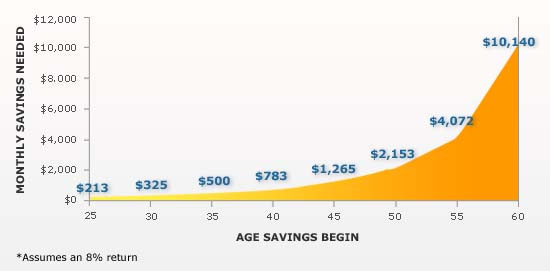
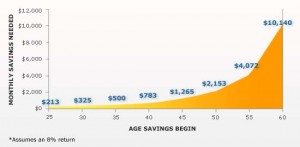
The chart above shows the age that savings begins and the amount you have to save each month to achieve a retirement account of $750,000 with an average 0f 8% return on the investments. It is pretty obvious that if you start early , you only need to save a small amount each month until you retire. If you delay savings until later years, the amount you need to save goes up dramatically.

Expectations

Why do we talk about expectations. Well I recently met with a friend of mind who was worried that he might not have enough for retirement. He is 65 and will have a combined income from several pension plans of $110,000 a year. After I picked myself off the floor I said to him, that there is always more stuff you want. There is always more things you want to do than what you will be able to afford,. But this level of income in retirement will be more than sufficient. Most people would give their eye teeth to have even half that amount.

Retirement Checklist

The following is a plan for getting started with retirement savings starting in your mid 30’s. Follow it and you will not need to worry about retirement funding:

Timeframe: Mid-30s to early 40s

Objective: Develop the habit of saving.
Savings: 1.5 times your annual salary before taxes by age 35.

  • Take full advantage  employer-sponsored retirement plan savings which  is the easiest way to put your savings on autopilot.
  • Boost your contribution. Increase your savings rate as your paycheck increases.
  • Explore other tax-advantaged ways to save. Depending on the country that you are in, there may be other tax advantaged savings opportunities that you can explore.
  • Six month Emergency Fund. Always have six months of savings tucked away somewhere that you can draw on if you are laid off or have a health issue that prevents you from working.

Invest in Quality.

    • Never invest in high risk investments. Seek out quality blue chip investments that have both a growth potential and pay dividends.

Retirement Checklist – Timeframe: Mid-40s to early 50s

Objective : Focus on how you invest your money.
Savings: 3 times annual salary before taxes by age 45

  • Review your portfolio. Work with a financial adviser and re-balance your portfolio along the lines of your investment profile. This can be scheduled annually or after a significant change in the markets.
  • Update your investment strategy. As you get closer to retirement, you will want to update your investment strategy and reduce risk exposure that may be in your portfolio. The objective is to move in the direction of preserving capital and maximize income.
  • Catch-up contributions. If you have fallen behind on your contributions or just want to make an extra deposit, this is the time to do that. Getting ahead of the savings curve can have huge benefits in terms of meeting your objectives at retirement.
  • Give yourself a reality check. Use one of the retirement calculators that are available and plug in the numbers. You will know quickly if you are on target or not and whether you need to make some adjustments to your assumptions and savings plans.
  • Consolidate retirement accounts. Many of us have more than one job through our career and may also have more than one retirement account as well. Consolidating them can make it much easier to manage and achieve your objectives. Always make sure that your investments are diversified across stocks and bonds.

Retirement Checklist – Timeframe: Mid-50s and beyond

Objective: Decide what type of retirement you want and how much money you will need
Savings:6 times your annual salary before taxes by age 55.

  • Prune my stock portfolio. As you get closer to retirement and plan to withdraw your funds, you will want to keep more of your portfolio in cash so that you are less exposed to market fluctuations. Having 2 years worth of cash is a great way to avoid having to sell low to meet your retirement cash withdrawals.
  • Plan your retirement. When you retire, how will you fill the hours of each day? Will you travel, will you move, what hobbies will you follow and will you have the money to meet your plans? fill your days and you will enjoy them much more.
  • Review your  income plan often. As you approach retirement, it is a good idea to review your plan often to confirm and update assumptions about your expected income as well as your planned activities and expenses.
  • Decide when to take Government Pensions. Taking government pensions early usually means a reduced pension, however cash flow and money needs may make it necessary to cash in early. Health issues are another issue. Use one of the calculators to help you decide when to take your government pension.
  • Develop a Plan B. Life throws a lot of curves at us. Over a 30 or 40 year planning horizon, many changes to your assumptions can occur. Develop a plan B that helps you to meet your goals. Some people will do a sensitivity analysis on their assumptions to see what happens. For example, assume you will need to retire at 60 instead of 65 due to company layoffs. What does that do to your retirement savings plans and life style?

If you spend some time on this now, retirement will be far more rewarding and quality of life will be far more enjoyable! For more ideas about retirement planning, click here.

Save

5 Retirement Tactics in a Low-interest-rate World

Retirement TacticsAt the time of writing this post, it appears that interest rates are going to stay low for some time. Developing Retirement Tactics is getting harder all of the time. Canada has tightened the mortgage rules even more than previously to prevent a US style real estate bubble. The opportunity to earn reasonable  investment income is getting tougher all of the time. Retirees are going to need even more money set aside in order to earn the money they need during retirement. So what can investors do and specifically what can retiree’s do to ensure that they are comfortable during retirement and have enough to live on?

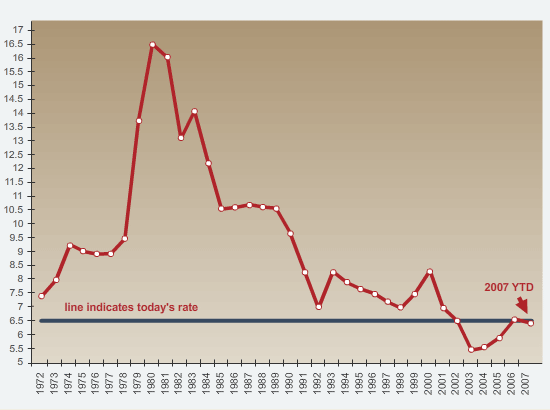
The chart above shows the interest rates for the past 40 years. There was a huge spike in the early 80’s which we never want to go back to again. Inflation and high mortgage rates of 21% even for the best customers with the best credit rating were the norm. Investors loved it because yields were very high.

Retirement Tactics

Today, interest rates are very low. Mortgage applicants love it since their costs for a mortgage are at the lowest they have been in the past 40 years. However for investors, it is a tough time. Corporate and government bonds are paying yields less than 4%, GICs are even lower and money markets are paying so low that it is not worth it to put the money in them other than to protect your capital! Governments around the world have telegraph that they are going to keep interest rates low to continue stimulating the economy. If you are in the Euro zone, some countries are paying high interest rates that reflect the high risk that are attached to their bonds. In other words they might not meet their interest payments and they may not repay the capital. Investors should be very careful if you are going to invest in this area.

Retirement Tactics – So what should an investor do?

There  are a number of things to do that will allow you to manage your investments and balance your risk vs. yield, however it looks like yields will remain low for some time.

Analyze Your Risks and Prioritize

This is something you should do on a regular basis and now is a really good time given the volatility in the markets to look at all of your investments, analyze the risks and then prioritize any actions that you may decide to take. Higher yields tend to have higher risk and that is certainly true for investment in Greek and Spanish bonds. But what about closer to home?  Some corporate dividends pay quite well, over 5%, however investors are encouraged to look at any potential risks associated with these corporations and exposure based on the volatility associated with the economy and the Euro crisis.

Retiree’s tend to focus more in income generation as well and that is why many people are moving to dividend producing stocks that have a history of increasing their dividends over time. This is one of the best ways to give yourself a raise over time while retired.

Assess your Expenses

All corporations do this and investors should be no different. Review all of your expenses and make decisions regarding were you can cut back and reduce your expenses. This is a very individual decision, however most people have money that they spend every day or every month that can be reduced or eliminated. This is a great way to make your money go further.

Seek Higher Yields vs. Safety

Balance yield and safety as we mentioned earlier. High yield bonds are inherently risky. Low yield bonds and GIC’s are very low risk, but your yield is going to be much less. Either increase your capital and save more to generate the income you feel you need or take more risk to generate the yield that you require to meet your income requirements.

Focus on Income

Speculation is a great thing and sometimes pays very well. Can you afford to take that kind of risk? Will you need to sell some of your equity at a time when stocks are low to give you the money you need? Most retirees will gradually shift from growth oriented portfolios to income oriented portfolios as they age and need the income to live on. Even if you go for low yield bonds with government or blue chip corporations, the income will be more secure and the capital will also be more secure.

Go Back to Work

After you have completed all of this analysis you may find that you cannot generate the income you need. You may also not be able to reduce the expenses enough to balance income vs. lifestyle. You might decide that even if you can find that balance you need there are other things you want to do. Maybe you would like to have some extra money to go on a trip, fix up the house or buy a new car. Whatever the reason, consider looking for a job that is fun and  rewarding. Find something that you enjoy and pays you what you need to meet your objectives.

Retirement Tactics – Other Options

In your personal life, there may be other options that are specific to your situation. Evaluate these as well and make a decision regarding whether they should be pursued or not.  They might make sense for you in your situation. Whatever you do, avoid procrastination. Get going now to assess your situation to maximize your income and minimize your expenses! Do it today.