Monthly Archives: March 2011

Baby Boomers Retiring

Baby Boomers RetiringBaby Boomers retiring in droves and the banks are issuing study results galore about retirement and baby boomers who will be flooding the market over the next several years looking for something to do. The first wave of baby boomers turns 65 this year. As a result, if they have not already retired prior to 65, then many will begin retiring this year.

The banks do all of these studies and report the obvious. Many are concerned about retirement. What will they do, do they have enough money? Will they be bored and will they go back to work? The answer is yes to all of the questions. Also no to all of the questions. It really depends on the person and the situation that they are in.

How Silly Are These Surveys?

I have a neighbor who retired last year at 65. His wife has been retired for several years. She is a retired teacher and he retired from a senior job at the government. We chatted one day. He expressed the concern that they do not know if they have enough money for retirement! Well of course they do,. But it comes down to lifestyle and how they want to live their life after retirement.

So forget all of these so-called surveys and focus on your situation.

Baby Boomers Retiring – Plan For the Future Now

Regardless of age (if non-baby boomers are reading this post, then you should pay attention to this part), you should have a financial plan. It does not have to be complicated. Basically, you need to assess what your retirement lifestyle desire will be in real terms. Then map out a financial plan to help you achieve your goals.

The later you start this plan the more difficult it will be for consumers to achieve their objectives. Starting early makes it very easy. While starting at 65 really means you must live on what you have and the pension income that you take in. A financial adviser can assist you with the development of the plan in terms of the numbers. However, you are the one who must do the work along with your spouse. Decide what kind of lifestyle you want and what you can afford.

Health

The bank surveys also show those baby boomers are concerned about their health and what impact their health will have on their retirement. Obviously, if you are in ill health, you are not going to be able to some of the things you planned on. All you need is one serious bout of sickness to make you realize that life is precious and you had better enjoy it as much as possible while you can.

Once you have a stroke or some other debilitating problem, no matter how much money you have, you are not going to be able to do all of the things you planned on including travel, sports, etc.

In Canada, medical costs do not play as significant a role as they do in the US because the government covers our routine medical costs. In the US, if you get sick and have no coverage, then you run the risk of either being totally broke or you do not get treatment and you die prematurely from something that is easily treatable.

Baby Boomers Retiring – Summary

The bottom line is to plan for your retirement taking into account your lifestyle needs and desires along with the amount of money you expect to have available during retirement. The two will have to be balanced no matter how much money you have. Apply a business-like manner to managing your assets and grow them to ensure that you have what is needed for retirement. For baby boomers, it is never too late to develop your plan, however, you will need to limit your objectives in order to meet your goals and objectives for retirement.

Enjoy your life now. If health issues become significant, they will put more of a crimp on your activities than money ever will, so figure out what you want out of life and go after it while you still can.


Age 60-Do You Have Enough for Retirement

Do You Have Enough for RetirementOk, this is a question that everyone wants to know the answer to. Do you have enough for retirement? The answer is different for every person, since it depends on their financial situation, their pension plan if they have one, and their savings in registered plans and nonregistered plans, and whether they own their own house or not.

Let’s assume you are 60 and thinking about retirement and wondering if you have enough savings set aside. To start with if you are 60 today and in relatively good health, there is a good chance you will live for another 30 years. If you work to age 65, then you will have 25 years that you will need to live on your retirement funds, pension, and social security benefits.

Average Account Balances

According to recent studies, consumers in their 60s had an average account balance of $144,000 at the end of 2009 savings. This is a very low number and may not take into account savings in non-registered plans, homes, cottages, etc.

If you are married and your spouse also has some savings, then you might be a bit better off, so before you get really paranoid about retirement savings, make sure you take into account these other factors. Where will your income come from? Here is a list of items to consider for both you and your spouse:

  • Company pension
  • Social security
  • Registered plans ( 401k’s, RRSP, etc)
  • Non registered savings
  • Sale of cottages, 2nd homes, etc
  • Sale of investment properties
  • part-time jobs

Complete your own inventory to assess what you may have in terms of annual income based on the list above. If we missed some, please let us know by leaving a comment on the blog at the end of this post.

If you find that you do not have enough savings and/or income, here are several steps you can take to begin rectifying the problem. Note that you are starting very late if you are 60, but better than not at all, right?

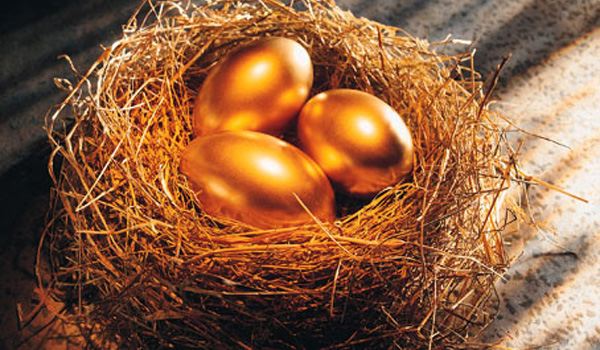
Do You Have Enough for Retirement – Build a bigger nest egg

If you are in your 60s and all you’ve got saved is $200,000 in a registered plan, you may not have enough funds to live on.

Using a common rule-of-thumb withdrawal rate, you would withdraw 4% of your $200,000 nest egg in the first year of retirement, or $8,000. That amount is likely to be inadequate. If you do not have other sources, then this amount is not enough and you really do not want to touch your principle if you can avoid it. What to do?

Reducing consumption now and saving more is the only real answer we can give. This is all about your personal comfort and quality of life during retirement and it is important that you take control of it now to try to make some level of quality of life work for you that is acceptable.

The rule of thumb currently is that you need about 30 times in assets of the initial withdrawals during the first year of retirement. For example, if you need $50,000 per year indexed to inflation starting at age 65 until age 95, then you need $1,500,000 in your portfolio at age 65. This is a far cry from the $200,000 average savings that many people have. If you can reduce the $50,000 by accounting for pension, social security, and other income, the amount of savings you will need will decrease accordingly.

Check your asset allocation

It is time to be conservative with your investments and focus on generating income from your investments. You cannot risk investing in speculative stocks and you need the income. Triple A bonds and blue chip stocks with a history of paying their dividends and increasing their dividends year over year are good things to consider.

Diversify your savings. Do not put all f your savings in one investment and do not chase that too good to be a true, sounding investment. You cannot afford to lose everything in something that is very risky. Speak to several advisers and form your own opinion. Don’t follow someone’s advice blindly.

If you are concerned about risk, GICs are the safest investment, however, they do not pay very much in terms of income. You will be able to sleep at night!

Find out what your limits are in terms of contributions to your retirement plan and contribute the maximum every year until retirement to maximize your savings for retirement.

Do You Have Enough for Retirement – Delay retirement

Now, this is an ugly thought, especially if you are planning to retire shortly. However, if you do not have savings and income, you may not have any alternative. Delaying retirement for several years can make a huge difference in terms of spending, savings, and your own well-being. You also delay the draw down on your savings as well which will benefit you over the life of your retirement.

Many people enjoy getting out every day to mingle with people and it gives them something to do.

Semi-retirement might also be an option for some folks. Working three days a week for example still generates some income. But also allows more time for you to explore your interests and spend time with the grand lids. It also keeps you sharp in terms of the business world as well. They say that you need to exercise the body as well as the mind to lead a fit life well into retirement.

Delay taking Social Security

Taking social security early comes with a price. Most plans as well as pension plans penalize the retiree by reducing the amount of money they pay out each year if they retire early. Every year you delay taking your pension or social security benefits will provide you with an increase in your payments, which can be a huge benefit in later years.

One last point to consider if you do plan to take your pension and social security early. If you are also planning to work, your taxes could claw back some of these benefits depending on how much you make.

Check with an investment adviser or pension specialist to assist you in any of these decisions.