
Monthly Archives: January 2011

Why you Need to Have a Will

Why you Need to Have a WillWe have had a will ever since we were married which has been over 35 years. It was just the smart thing to do. We wanted to make sure that our kids and significant other were looked after in case something happened. However every once and awhile we run into someone our age who does not have a will. Why you Need to Have a Will? We are amazed that they have not done something about this major issue. Perhaps they just have not thought things through. Or they have this silly emotion that it puts you one step closer to the grave. You would be surprised at how many people actually think this.

Why you Need to Have a Will

If you are a responsible adult, then it is time to step up and do the right thing for your family. If you need to make some tough decisions, then make them, but get on with it. Here are some of the reasons why you should not delay this one more day!

  • Your kids
  • Your home
  • Saving for retirement
  • Purchasing insurance
  • Business ownership
  • End of life decisions

Having a will is only a part of estate planning. We will focus on this element on this blog, but please give some thought on how you want your estate dealt with in preparation for the time when you can no longer make decisions.

Many of us think of estate planning as something only seniors must do. The truth is, it’s essential for every adult with a spouse, child or business, regardless of age, to have solid plans in place. People in their 20s and 30s are in high gear. They may marry, start a family and buy a home. Some may start or buy a business. It’s all about getting started in life and nobody wants to think about taking their foot off the accelerator.

Having a will can provide some protection for the important people in your life  and assets that you have.

Why you Need to Have a Will – Children

If a young couple is killed in an accident, their young children must be raised by someone else. If the parents haven’t made wills, they have lost the opportunity to choose the new guardians of their children, and to have the children raised together in one family with someone they know. Most parents, confronted with the choice, would rather not have extended family members dispute guardianship in court. And certainly not many would want to risk the children becoming wards of the government.

Using a will, the parents can also make provision for money to flow from their estates to the guardians of the children to help pay for raising the children. This could be vitally important if two or three children are left behind to join a different family that already has two or three children of its own.

Buying a home

Even young people without children should plan ahead for a premature death that leaves one of them widowed. As mentioned, a will is essential – but estate planning doesn’t stop there. Some assets are not governed by a will, namely jointly held assets and assets with designated beneficiaries. It’s important that everything works together.

One of the largest purchases a young couple will make is a family home. They must understand the legal effect of a jointly owned home as opposed to a home held as tenants-in-common. An incorrect title can have a devastating effect if it causes a widowed person to lose his or her home as well.

Joint tenancy, which is by far the most common way that couples own their property, provides a right of survivor ship to one owner when the other passes away. It keeps the house out of the estate; probate is not required for its transfer to the surviving owner. Tenancy-in-common doesn’t provide a right of survivor ship. The half of a house owned by a deceased tenant-in-common falls into the deceased’s estate, where it’s subject to creditors, claims and delays.

Saving for retirement

Couples often start contributing to RRSP’s when they’re young and they need to understand the legal, tax and financial effects of naming a beneficiary. They also need to consider who will be named as the beneficiary of life insurance policies. Leaving insurance proceeds directly to a spouse will have quite a different effect than leaving them to an estate, depending on what else is going on in that estate.

Because assets of a deceased are deemed to have been sold immediately before death, any tax that has been deferred becomes payable. RRSP’s are funded with pre-tax dollars, so on the death of the owner, the deemed sale triggers the payment of taxes on the RRSP. The payment of this tax can be avoided on the death of the RRSP owner if he or she names a spouse as the beneficiary. When a spouse is named, the payment of tax is deferred again – until the spouse dies or takes the money out. This also protects the spouse in the sense that the RRSP doesn’t fall into the deceased’s estate so it is safe from claims, creditors or litigation.

Buying life insurance

Leaving a life insurance policy to a spouse directly also keeps the insurance proceeds out of the estate, ensuring that there are funds in the spouse’s hands no matter what is going on in the estate. This is better for the spouse. On the other hand, there are excellent reasons to name the estate as the beneficiary of a life insurance policy. The main benefit is that it provides cash in the estate that can be used for paying tax or paying debts (such as paying off the mortgage on the couple’s home).

Life insurance can also be used to provide money that can be distributed to one of the children. For example, the deceased was leaving his or her major asset – a business or farm- to one child. They didn’t have enough assets to give a similar amount to another child. Another use of life insurance is to create funds for holding a property such as a cottage in trust. So it’s very individualized depending on what the person is planning to do, and based on what assets already exist.

Life insurance is much cheaper at this age than it is when people are older. Young people should consider the various ways that life insurance can be used to their advantage. It can replace income. Life insurance can pay out a mortgage, leaving the widowed spouse with clear title to the home. It can provide funds to leave in trust for the children. It can provide cash flow to be used to pay taxes and expenses. Young couples should ensure that they are neither under-insured nor over-insured.

Starting a business

Finally, young people who are tying up a great deal of time, effort and capital in a business must plan right from the start to protect their families. If the business is incorporated and there are other shareholders, there should be a buy-sell agreement put into place that clearly states what happens to the shares of a deceased shareholder. Often the agreement provides that the other shareholders will buy back the shares. In a fledgling company (and often in more established ones, for that matter), this probably means that a life insurance policy owned by the company will be taken out on the shareholder’s life.

Living Wills

You might be incapacitated by an accident, stroke or some other complication. Who do you want to make the decisions about your care and medical treatment? How far should they take the treatment in terms of trying to save your life? These are all questions that you do not want to leave up to just anyone. It should be someone you trust and not a court appointed bureaucrat!


Making Money off Blogging

Making Money off BloggingThis is a re-post of an article I read on Market Watch about Making Money off Blogging. It is re-posted here in it’s entirety. We posted this article here since many of our friends wonder about what Adsense and blogging is all about and why would I spend so much time working on something like this. It is foreign to the entire concept of going to an office, getting a paycheck and not working for your self. I thought that maybe they would see this and understand a little bit more why I blog:

Jan. 12, 2011, 12:01 a.m. EST

Making Money off Blogging

Successful bloggers describe how they made a go of it

By Marty Orge

SAN FRANCISCO (MarketWatch) — Blogs are an ever-growing presence on the Internet, but can you make money in this crowded field? Certainly, some people do, and a big part of their success is choosing the right topic to write about — and then sticking to it until the audience, and advertisers, come.

There were 126 million blogs on the Internet in 2009, the most recent figure available, according to Pingdom.com, which tracks Internet growth. Some provide a healthy income for their authors.

Start with passion, and the money will follow, said Joel Comm, a new-media marketing strategist in Loveland, Colo., and author of “KaChing: How to Run an Online Business that Pays and Pays.”

“Niche is the way to go, and micro-niche is even better,” Comm said. “To be successful with a blog you need to find your passion.” Successful bloggers want to write about whatever they’re passionate about, he said, even if they don’t get paid.

For example, if you love dogs, there’s a niche. “I’m partial to Yorkshire Terriers,” Comm said, “so I could blog about Yorkies, defining my niche even more,” he said. “Find a topic where you can display your knowledge and become the blogging expert about it.”

Not always about the cash

For Neal Schaffer, who earns $100 a month from blogging and gets 20,000 visitors each month, it’s not about the money. Blogging is a way to attract potential clients.

Schaffer is president of Windmills Marketing in Newport Beach, Calif. He blogs about social-media strategies for professionals and businesses at WindMillNetworking.com.“Because I built a trustworthy relationship, people reading my blog are ready to purchase services I offer. Blogging is free advertising for my business,” he said. “It is in my consulting and speaking business where I make a living.”

Schaffer uses Google AdSense and affiliate marketing programs. Google offers AdSense, which delivers ads, free to site owners and bloggers. Payment is usually based on how many visitors come to the site or click on the ads. Affiliate marketing programs pay bloggers when visitors click on their proprietary ads.

Praveen Puri

is a financial and software blogger in Aurora, Ill., and author of “Stock Trading Riches.” He earns an average of $250 a month from four blogs, including Simple-Trading-System.blogspot.com and unix-simple.blogspot.com.

“I make about $50 from selling my books on my blogs, $10 from Amazon affiliate sales, $140 from sponsored posts through PayPerPost.com, Blogertise.com and SocialSpark.com, and $50 from selling paid links directly to advertisers,” he said. “I work on my blogs about 16 hours a week.”

Long hours and minimal income don’t deter Puri. For him, blogging is like a hobby. “Most hobbies cost money,” he said. “With blogging, I’m enjoying a fun hobby where I’m actually making more than I have to pay out.”

Puri said his blogs also help him gain credibility as a source on Unix programming and financial investing. And he does want to see a bigger payoff from his blogging. “There is the hope that I will eventually make a breakthrough where one or more of my blogs or posts go viral and exponentially create a big audience where I could make more money.”

Marc Matsumoto,

a New York-based editor and publisher of the food blog NoRecipes.com, said he makes $1,000 a month in blog ad revenue and gets 160,000 visitors to his blog a month.

But his blog serves as the gateway to other income. Matsumoto said he has gotten paid recipe-development jobs for periodicals, books, and packaged-goods companies from his blog. “I’ve also gotten paid food-photography gigs primarily for packaged-goods companies. Almost 100% of my leads come through my blog,” he said.

“I work 40 to 50 hours a week on purely blog-related activities,” he said. “I left a job as a marketing executive three months ago to pursue the blog and work on it full-time. A blog is a portfolio piece that helps you build your brand and secure other work.”

Blogging for real money

Nick Veneris is chief executive of Xomba.com, an online writers community. Writers post original content and share AdSense revenue.

“Our users made a total of $45,000 last month, so, yes, Google ads do pay,” Veneris said. Xomba shares AdSense revenue 50/50 with writers, with some individuals making $1,000 to $3,000 a month. According to Veneris, topics that pay the most are technology, retail sales and shopping, entertainment, health and business.

Meanwhile, Marc Aarons said he earns $2,000 a month after two years of blogging about mobile broadband on Mobile-Broadband-Reviews.com.

“Ninety percent income is from Google Ads,” Aarons said. “They work.” The Atlanta, Ga.-based blogger spends two to four hours a day on his blog, “with a morning commute to the kitchen.”

Aarons credits his success to hard work and transparency. “Hardly anyone is willing to support you, let alone hand over any money to you, without transparency,” he said, referring to being up-front and clear about advertising relationships.

“For many people who’ve had some level of success on the Internet, transparency has usually been a big part of making that happen,” he said

Always Provide Value

Also, successful bloggers must first provide value, Aarons said, and make money later. Doing so builds the trust and creates the relationship that’s necessary to build an audience. “You want your visitors to search for you, find your message resonating and stick around because you solve problems for them,” he said. “That’s the name of the game.”

New-media marketing strategist Comm agrees. “It’s all about bringing value to the conversation. What do your readers want? If all you think about is making money, that’s putting the cart before the horse. Bring value to your blog first. That’s the only way to make money.”

Carving out a micro-niche

“It’s important to know your niche and to continuously feed a blog or website when the subject is hot,” said Talya Schaeffer, founder of the blog CyberBlackFriday.com, which features online Black Friday sales.

Schaeffer’s research showed Black Friday-related searches begin in September and end right after the event. Schaeffer saw the trend unfold and watched as it intensified in November. “I updated the site frequently with the latest Black Friday deals this holiday season and generated $4,000 between October and November using Google AdSense and affiliate programs with retailer websites,” Schaeffer said.

Frugal-minded web surfers have helped Chelsea Rustrum earn $10,000 to $12,000 a month with her website and blog FreeMania.com.

“My audience is mostly moms between the ages of 25 and 45 who are interested in saving money, trying new products free of charge and printing coupons for items they buy anyway,” she said.

Rustrum publishes FreeMania.com in Santa Cruz, Calif. “I’ve also recently worked out of Florence, Bali and Thailand. I can work anywhere, all I need is my laptop and a stable Internet connection.” She monetizes her blog using Google AdSense, Commission Junction and Hydra Network.

Sending Out Newsletters

Along with blogging three or four times a week, Rustrum also sends out emails to 150,000 subscribers. “My priority at this point is building a community that is engaged and social, which will naturally result in more visitors and more time spent on the site. The more unique, high-value content I can offer, the better.”

Rustrum said that, to be successful, bloggers must figure out what they are good at and what they are passionate about — and then blog about that. You need a clear vision. “Don’t start out with the intent to build a blogging empire,” she said.

“It sounds cliché but I truly believe if you write about something you’re passionate about the people will come. And when the people come, the advertisers will come,” Rustrum said.

As chief executive of SheFinds Media and publisher of SheFinds.com, BrideFinds.com and MomFinds.com, Michelle Madhok has built a web and blogging empire, earning $1.3 million a year.

Madhok started SheFinds.com in her apartment in New York City in 2004 and made about $30,000 a year. She worked 70 hours a week. Her niche worked and traffic and sales increased each year. By 2008, “we were doing about $500K in sales,’’ she said. “This year I’m working 50 hours a week and we’ll gross $1.3 million and get more than 1.2 million visitors to the sites.”

Transparency — it’s the law

Whether earning $1,200 or $1.2 million a year online, today’s bloggers are careful to be transparent about advertising income. There are two reasons for this openness, said Lorrie Thomas, chief executive of the online marketing agency WebMarketingTherapy.com in Santa Barbara, Calif.

The first reason bloggers are open about advertising income, Thomas said, is because most blogging income comes from online ads and links to affiliate advertisers. Thomas said bloggers are open about their advertising stream of revenue because they want to attract even more advertisers. High earning sites attract new advertisers.

The second reason bloggers strive for transparency? In 2009, the Federal Trade Commission updated the FTC Act of 1980 — specifically, the guidelines for consumer endorsements and testimonials. The FTC mandated that bloggers disclose clearly on their sites if they are getting paid in free products, affiliate revenue or online ads. Failure to follow the FTC guidelines could result in a cease-and-desist order.

Marty Orgel is a freelance writer in the San Francisco Bay Area.

Ten Financial Steps

Ten Financial StepsNo one wants to think about their death, however part of financial planning is to take this scenario into account so that your family is well protected and looked after in case you do die. Financial planning is also important to ensure that your quality of life meets your objectives and that your family has a quality of life that is satisfactory. There are Ten Financial Steps to consider as you plan your financial life.

This is the time of year to put everything in order and complete one of your New Year’s resolutions.

Without a will, what happens to your kids? to your wife? How will they support themselves? What will they do when the bank will not release your assets because there is no will? How will they pay the bills and buy groceries? These are just a few of the reasons why you need to have a will and what can happen if you do not have one. Basically, you need to assume that all of your assets will be frozen until a government bureaucrat decides how your assets should be distributed.

Ten Financial Steps

Your will

When you pass away, your family should look after the funeral or memorial first, however, the will should be consulted in case there are any special circumstances concerning the memorial that are mentioned in the will, but then they’ll have to focus attention on finding a copy of your will. Make sure your will is up to date and make sure your executor knows where to find the executed copy, and knows which lawyer prepared it for you. Having this information available makes their job much easier in an already stressful situation.

Your assets

Your executor will have to gather information on what assets you owned at the time of your death. Prepare a complete list and update it annually. Tell your family who your financial advisers are since they will likely need them for help in dealing with your assets after you are gone.

Funeral costs

Your family will be in a fragile state emotionally when you pass away. It will be difficult for them to negotiate funeral costs at that time. Solve this issue by planning your funeral today or delegating someone who can carry out the family’s wishes. You can even prepay for your funeral if you want. Visit a local funeral home to discuss it.

Bank accounts

If your spouse shares a bank account jointly with you, they will be able to access the cash immediately after you pass away. Joint bank accounts make sense for this reason. Consider making the bank account(s) used for day-to-day expenses joint accounts. Also, ensure that any corporation bank accounts have more than one signing officer so that those accounts can be dealt with efficiently.

Life insurance

Make sure your family knows who your insurance adviser is. Further, make sure at least one insurance adviser knows about every policy you might own, and ask him to keep a record of this information for you.

Government benefits

Three types of benefits may be available to your surviving family members. If you have contributed to the Canada Pension Plan, there will be a death benefit (a one-time payment, to a maximum $2,500), a survivor’s pension (a monthly pension paid to your surviving spouse, averaging about $300, but which can be as high as about $560), and a children’s benefit paid to a surviving child (a monthly benefit of about $215 a month per child under age 18 or up to age 25 while still a student). Your family must apply for these benefits after you have gone.

Registered plans

Any registered retirement savings plans or registered retirement income funds owned by you at the time of your death can generally be transferred on a tax-free basis to a registered plan in your spouse’s name (or to a dependent who is a minor or has a disability). Simplify things for your heirs by reviewing your named beneficiaries on these plans today. Ensure the right people will receive these assets when you are gone.

Employment matters

Your family should call your employer to determine whether there are any amounts owing. Such as salary, vacation pay, or bonuses. They should also inquire as to whether the employer can pay any amounts as a tax-free death benefit. For example, up to $10,000 can be received tax-free where it is considered a death benefit in recognition of an employee’s service. Let your family know who they should contact at your office in the event of your passing.

Your debt

Have you purchased insurance to pay off your debts in the event of your death? If you’re insurable, make life easier for your family by doing this. Term insurance (the cheapest) is just fine. Especially if the debt has a term to it and is expected to be paid off in the future.

Summary of information

Much of the information you will want to provide about assets, contact names, and so on, should be summarized in one document. If you do not have a document template, search for one on the internet. Or ask your lawyer or funeral home if they can provide a document for gathering this information.

New Years Resolutions

New Years’ is just around the corner and it is time to give some thought regarding what yours will be! Everyone makes  New Year’s resolutions usually associated with losing weight and New Years Resolutionsfinances that are healthy promises easily made and easily broken sometimes the next day. If you are the type that has done this in the past, then this year when you make New Year’s resolutions, write them down and post them somewhere you can see them every day. Remind yourself of these resolutions so you at least think about them every day. You still might not keep them all of the time, but even if you keep them every second day, you are ahead of the game! This is one of the most difficult things that most people face. How do they actually meet their New Years Resolutions? For more ideas, read on!
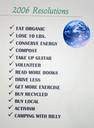
Motivation to Keep New Years Resolutions

That is of course if you really have the motivation to keep them. Many people just make them so they can say they are making New Year’s resolutions and then forget them the next day. This post is not going to help these people that are not serious at all so don’t waste your time. On the other hand, if you are serious about New Year’s resolutions, then maybe you have a chance of keeping them. Take a moment and read the rest of this post. Even if you pick out one nugget of information that helps you, you are ahead of the game! Pick something that is achievable, that will take some commitment. If you select something that is outside your ability to achieve, you may just get discouraged and quit. Everyone wants to be a winner!

New Years Resolutions – Surveys

According to a Sun Life Financial survey conducted by Ipsos Reid, with the new year quickly approaching, three-quarters of Canadians are resolving to improve something about themselves. Health-based resolutions are by far the most popular with over two-thirds of those making resolutions (74 percent) stating they resolve to either increase exercise or lose weight in 2011. Eating healthier (31 percent) rounded out the top three choices.

However, when it comes to making permanent changes, eight out of ten respondents admit they’ve failed to keep past resolutions with a lack of motivation and willpower (76 percent) identified as the main barrier to maintaining new year lifestyle changes. Thirty-eight percent also cited a lack of money followed by lack of time (35 percent).

So How do You Keep New Years Resolutions?

All resolutions are good ideas and often will improve your overall lifestyle and quality of life regardless of what they are. So we are all off to a good start, however, the easy part is making them and the hard part is to keep them. Talk is cheap!

Select relatively easy resolutions to keep and set stages or milestones that take you in the direction of completing your resolution. This way you will feel that you have achieved something each time you reach a new milestone.  We all need positive feedback and to see progress. This is one way to ensure that you get both.

People who set resolutions that are fun to achieve such as travel or visiting with relatives are easier to keep than others that are more difficult such as losing weight. Chances are you will keep the good ones that are fun and not some of the others unless you make a real effort with a firm plan.

Smoking, Drinking, Saving, Reducing Debt

These are all very difficult resolutions to keep if you are trying to smoke less, drink less, save more and reduce your debt.  Each one requires commitment and a specific plan with dates. Also, objectives if you are going to have any success at all in meeting your goals.

Some people can go cold turkey regarding smoking less or stopping. Most cannot and the relapse rate is pretty high. Other people will gradually cut back until they are hardly smoking at all. They may only smoke at parties or in stressful situations. This is like placing candy in front of a child and telling him not to eat it.

Whatever your plan, select wisely and select goals that you can reasonably achieve. If you would like to leave a comment that will benefit our readers please do so. Comments that help our readers or give ideas are well received and supported by this site.